

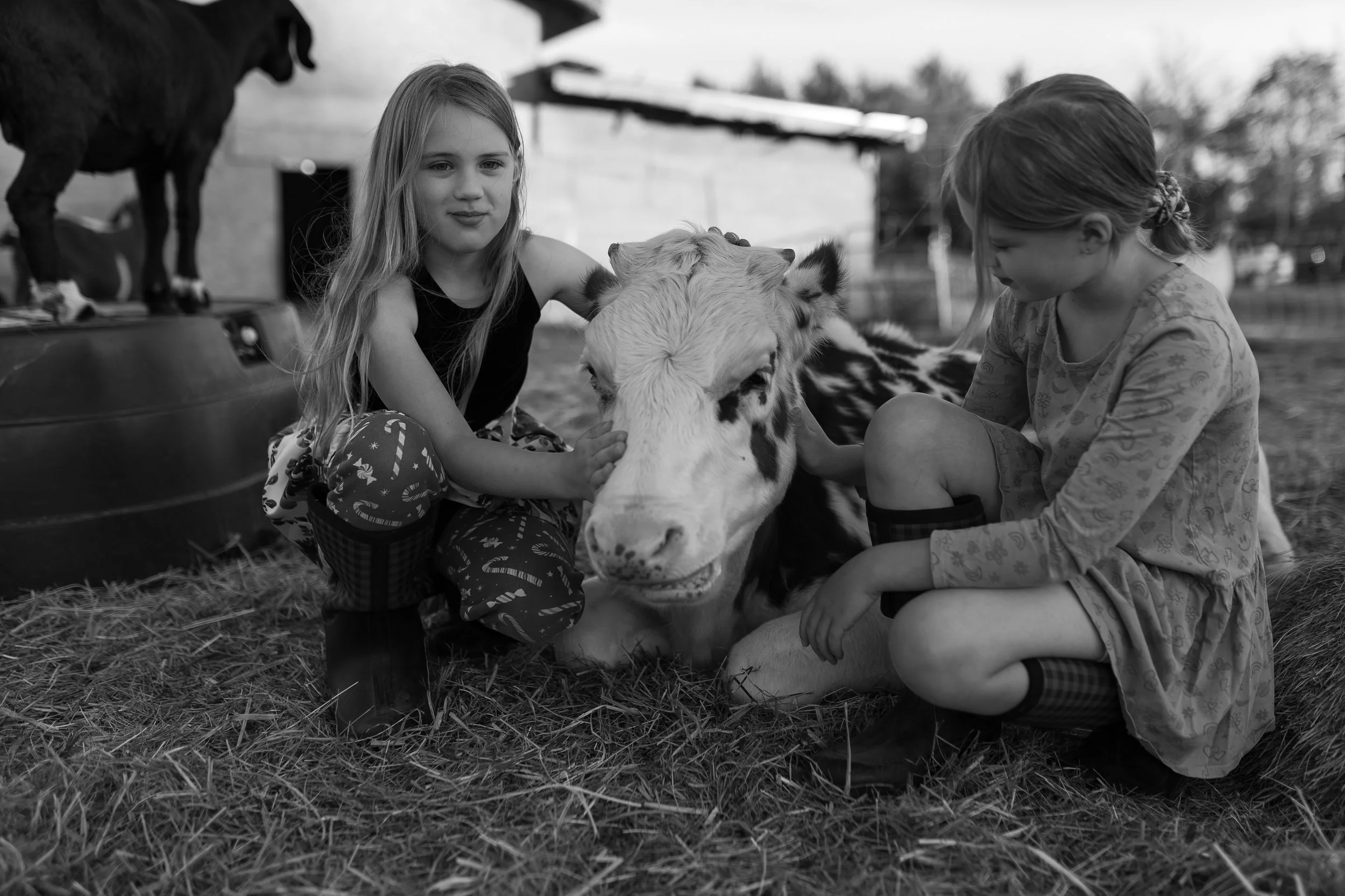
Therapy for children — on the farm
Ages 6–12 | In-person on the farm near Newburgh, Ontario
If you're a parent reading this, you probably already know something is off.
Maybe your child is struggling with big emotions that feel impossible to manage. Maybe they're anxious, withdrawn, reactive, or carrying something you can't quite reach.
Maybe you've tried talking to them and hit a wall. Children often can't tell you what's wrong. But they show you — through their behaviour, their bodies, and what happens when they feel safe enough to just be themselves.
That's what the farm is for.
What sessions actually look like
Child therapy at Wandering Willow doesn't look like sitting in a room answering questions.
It looks like moving around the farm, meeting the animals, talking about what's happening in their life while doing something real alongside it. It looks like attempting to lead Cinnamon — our very opinionated cow — and noticing what comes up when something doesn't go the way you expected. It looks like big feelings are getting named in the middle of something that has nothing to do with feelings.
Children don't always have language for what they're experiencing. They don't need to. The farm gives them something to do while the therapeutic work happens, and often the most important moments come sideways, in the middle of something else entirely.
Sessions are 50 minutes. In-person on the farm near Newburgh, Ontario. Parents are welcome to be on site and involved in sessions or to wait nearby — we figure out what works best for your child and your family together.
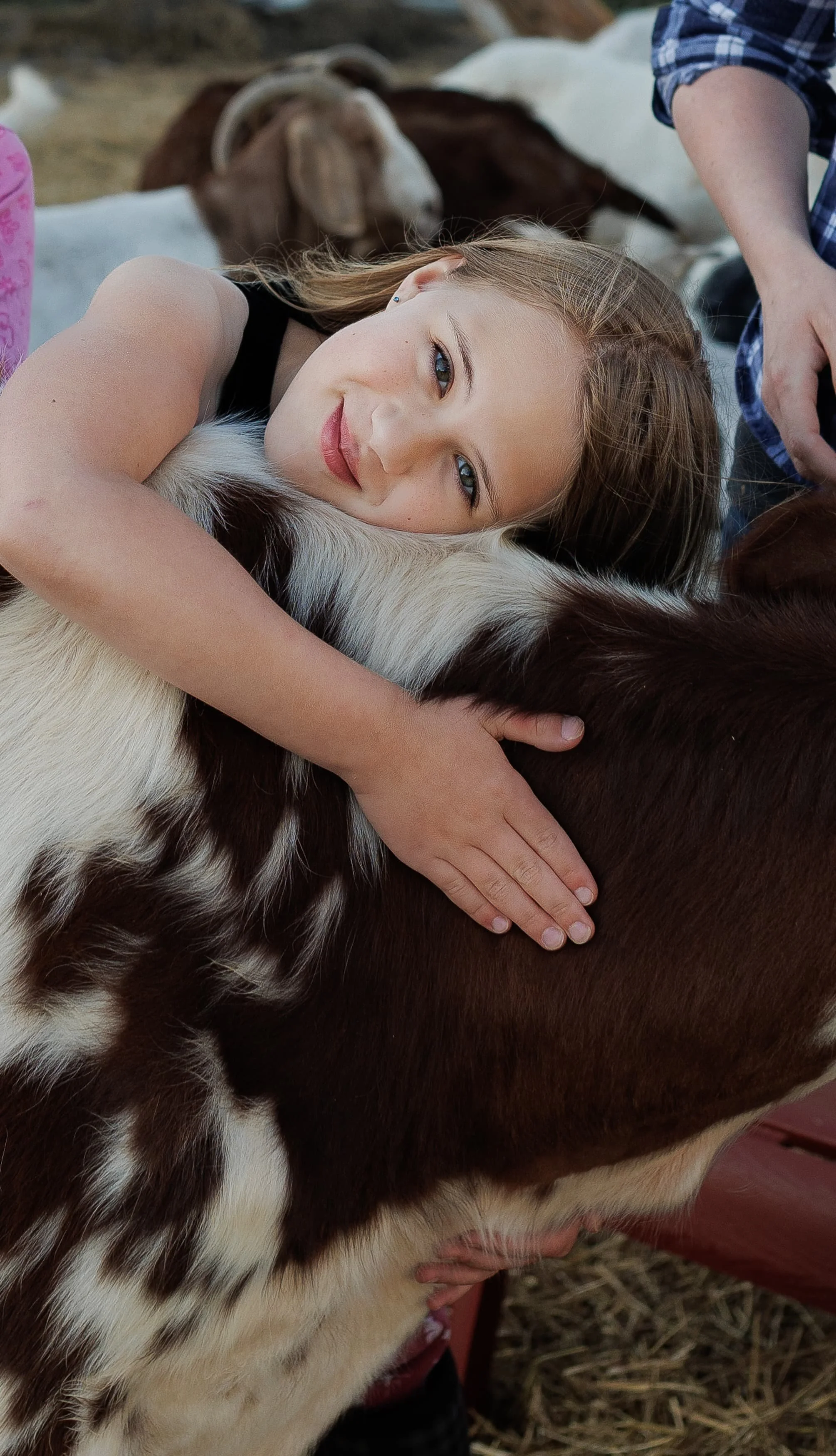
What this works well for
Children who do well with farm and nature-based therapy tend to be kids who:
✓ Have big emotions that feel overwhelming or hard to manage
✓ Struggle to talk about what they're feeling but respond well to doing things
✓ Feel different, misunderstood, or like they don't quite fit
✓ Are anxious — about school, social situations, change, or things they can't name
✓ Have been diagnosed with ADHD, autism, or other neurodevelopmental differences
✓ Have experienced something difficult and need a space to process it at their own pace
✓ Haven't connected with traditional office-based therapy
The farm setting is particularly well suited to children who struggle in structured indoor environments. There's no expectation to sit still, maintain eye contact, or pretend to be okay. The animals don't care about any of that and neither do I.
Who I am and why this works
✓ In-person sessions on the farm near Newburgh, Ontario
✓ Ages 6–12
✓ $180 per session
✓ Insurance receipts provided for most extended health plans
✓ Direct billing available for Green Shield Canada other insureances accepted though not direct billed
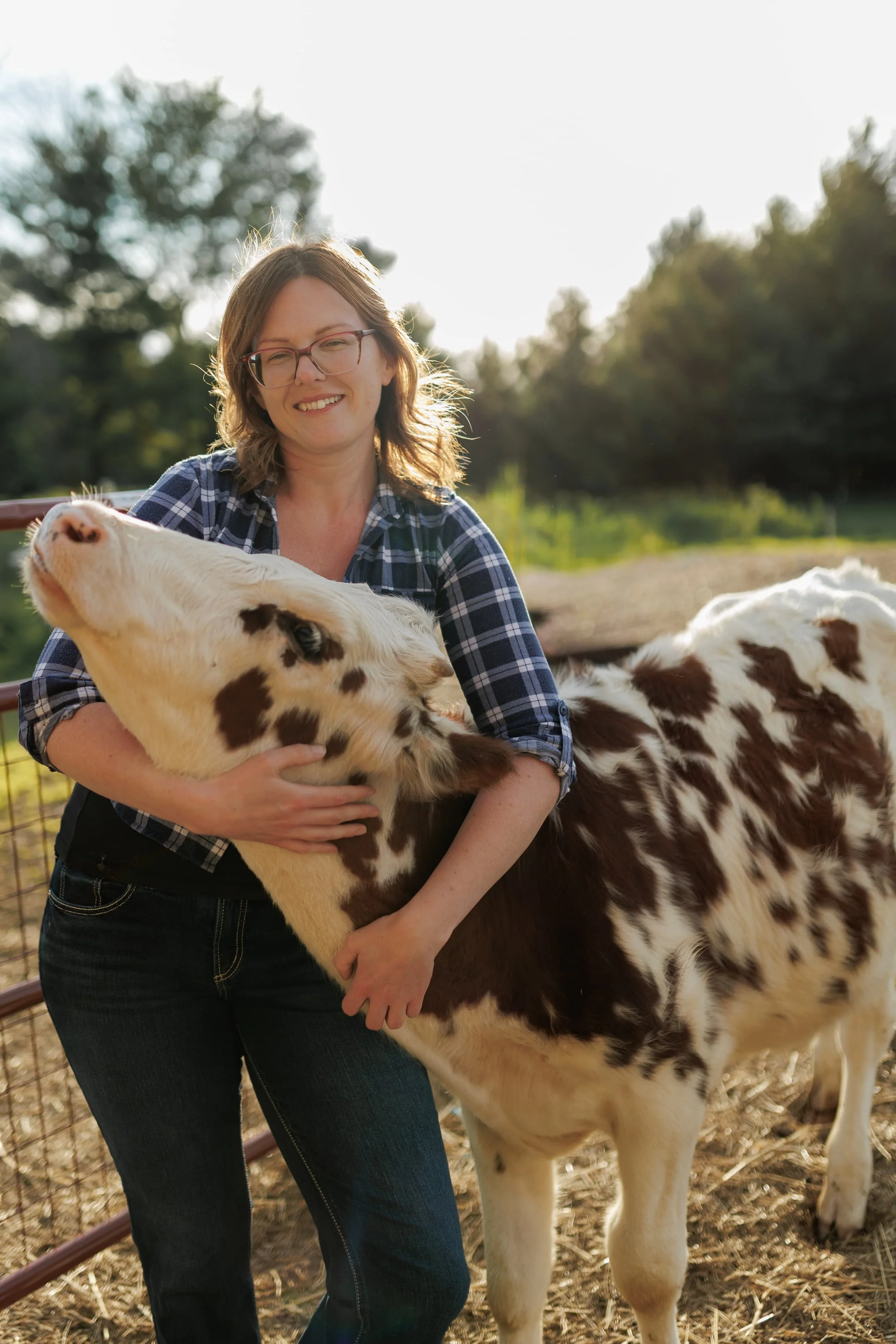
I'm Cait — a Registered Psychotherapist (Qualifying) and Registered Practical Nurse.
I grew up in a home full of foster children and have been working with kids in some capacity since I was twelve years old. I spent years in disability services supporting children with complex needs before going into nursing and then psychotherapy. I have over 20 years of experience with children across a wide range of presentations — including significant experience with autism, ADHD, FAS, and complex trauma.
Children have always found their way to me. I'm not easily rattled by big behaviour, I don't need things to look a certain way, and I have a lot of patience for the kind of kid who has already been told they're too much somewhere else.
My approach is grounded in ACT in Nature and nature-based therapeutic practices — using the farm environment, the animals, and the land as active parts of the therapeutic process rather than just a backdrop.
As a nurse I also understand how stress, anxiety, and emotional overwhelm show up in children's bodies — not just their behaviour. That dual lens changes what I look for and how we work.
Ready to take the next step?
You don't have to have it figured out before you reach out.
Most parents who contact me know something is wrong but aren't sure what it is or what kind of support their child needs. That's completely normal and it's exactly what the first conversation is for.
Parents are welcome to be involved in sessions — either as active participants or present on the farm while their child works with me. We figure out what makes sense for your child's age, capacity, and what you're working on together.
If your child has a diagnosis, a history, or specific things I should know before we meet — share what feels relevant. You know your child. I'll do my best to meet them where they are.
If you have any questions please feel free to reach out.