


Online Couples Therapy in Ontario
at Wandering Willow
Why does our relationship feel so hard right now?
“I don’t trust them anymore, and I don’t know how to get it back.”
“I feel like I’m the only one trying.”
“They shut down, and I don’t know how to reach them.”
“We keep having the same conversation, and nothing changes.”
“I don’t know if I can get past what happened.”
“I feel anxious in my own relationship.”
“I don’t even know how to talk to them anymore.”
If this sounds familiar, you’re not alone—and it doesn’t have to stay this way.
We spend a lot of time discussing the pattern behind the conflict. In fact, my clients are very used to me pulling out a whiteboard to visually draw it out.
It can feel like one of you is the problem.
“What usually happens is a pattern forms between you.
One person pushes to talk, fix, or understand.
The other pulls away, shuts down, or avoids.
The more one pushes, the more the other pulls away.
And the more that happens, the more frustrated, disconnected, and stuck you both feel.
And after a while, it stops feeling like you’re on the same team.
What is Couples therapy?
Couples therapy is a structured form of psychotherapy that helps partners understand the patterns driving conflict or disconnection and build new ways of relating to each other. It's grounded in evidence-based approaches like Emotion-Focused Therapy and the Gottman Method.
What does this look like?
The same conversations keep happening
Small things turn into bigger arguments
One of you feels unheard while the other feels overwhelmed
Nothing seems to actually resolve, even when you try
Sometimes what’s underneath the pattern is an emotional injury: Something that happened changed how safe the relationship feels.
You don’t have to have everything figured out before you start.
What couples therapy looks like and how it can help
Couples therapy is a 50-minute space where we slow things down and look at what’s actually happening between you: emotionally, mentally, and physically.
Not just the arguments, but the pattern underneath them.
Instead of going in circles, we start to understand:
What each of you is reacting to
What’s happening underneath the conflict
and how those patterns keep repeating
This is where things start to shift.
Sessions may include:
✔ Noticing interaction patterns as they happen
✔ Understanding emotional and nervous system responses beneath reactions
✔ Learning how to interrupt unhelpful cycles and repair more effectively
✔ Practicing in real-time tools that will help you have different conversations
What to expect in couples therapy
Couples therapy isn’t a place where you come to argue and hope the therapist takes your side.
You can already do that at home.
In our work together, we move away from “who said what” and what happened on the surface.
Instead, we focus on what’s underneath it.
Because most conflicts aren’t actually about the dishes, the tone, or the moment itself.
They’re about how something felt and what it meant to you.
This often means I’ll slow things down and interrupt when needed.
Not to shut you down, but to help you notice what’s actually happening in real time.
The goal is to create a space where you can move out of the cycle you keep getting stuck in,
and into something more honest, clearer, and more connected.
Who I Am & How I Work
I’m a Registered Psychotherapist (Qualifying) and a Registered Practical Nurse.
My work is grounded in understanding stress and how it shows up in both your mind and your body.
Let’s be honest—what’s more stressful than relationships?
Whether it’s a partner, your kids, or your family, this is where stress shows up the most.
My work is guided by evidence-based approaches, including:
-
EFT focuses on the emotional patterns between you.
Most couples get stuck in cycles where one person pushes and the other pulls away. Over time, this creates disconnection, even when both people want things to improve.
We work on identifying that pattern, understanding what each of you is feeling underneath it, and creating new ways of responding that actually bring you closer instead of further apart.
-
The Gottman Method focuses on practical tools and understanding how relationships function over time.
This includes things like communication, conflict patterns, and how you repair after difficult moments.
It’s not about avoiding conflict—it’s about learning how to move through it in a way that doesn’t damage the relationship.
-
Sex is often a reflection of what’s happening in the relationship as a whole.
If something feels off here, there’s usually something underneath it.
There are typically two areas we look at:
Emotional context
How safe, connected, and understood you feel in the relationship.
When there’s tension, disconnection, or unresolved conflict, it often shows up here first.
The brain and desire
How your body and nervous system respond to stress, pressure, and expectations.
Desire isn’t just about attractionit’s influenced by stress, mental load, and how safe your system feels.
We look at both, because addressing one without the other usually doesn’t lead to lasting change.
You don’t have to have everything figured out to start.
Flexible scheduling options are available, including evenings.
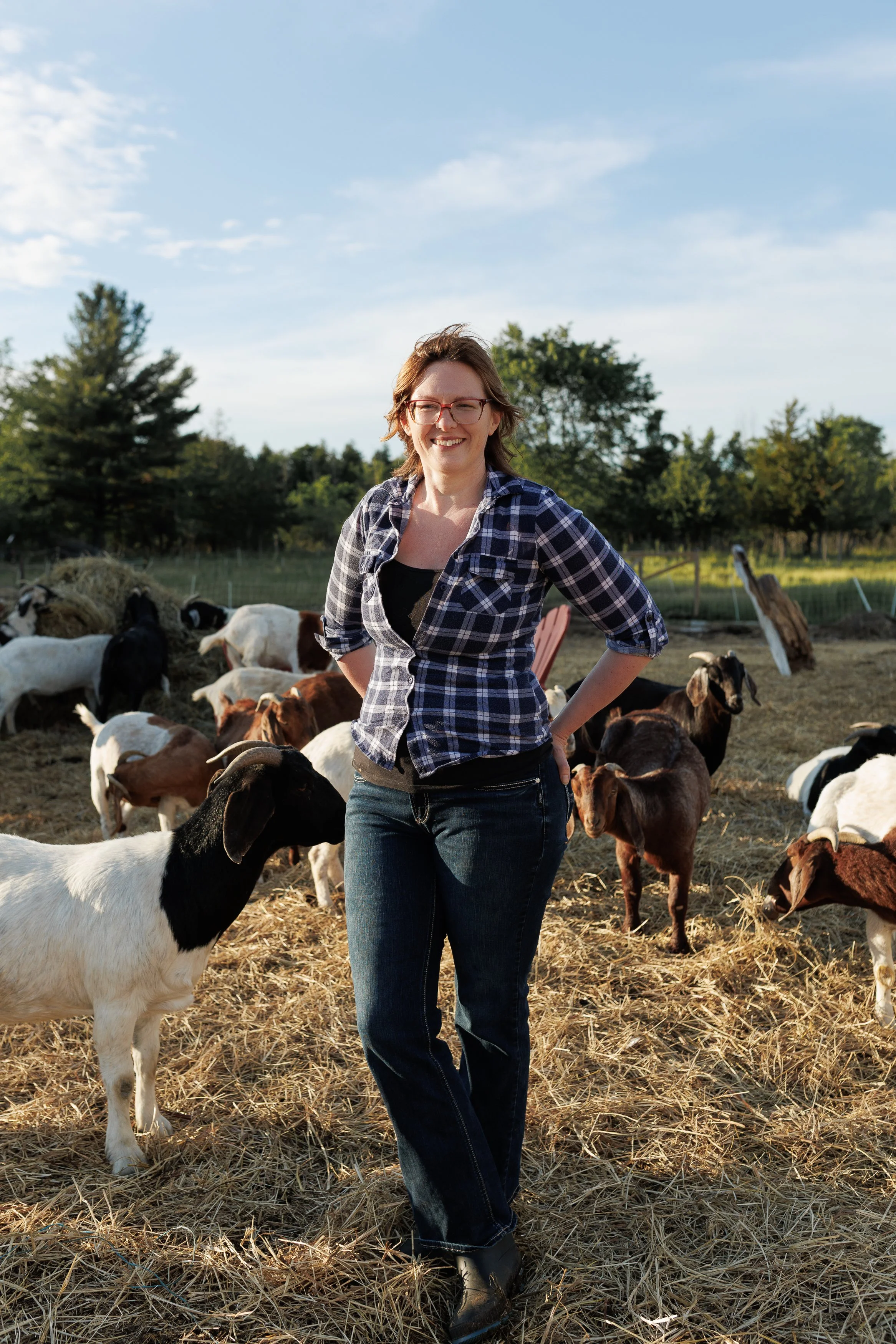
Virtual sessions are offered across Ontario, with in-person sessions available on the farm.
FAQ
-
Not at all — and honestly, the earlier the better. A lot of couples come in when they've been having the same conversation for years and nothing is changing, or when they feel more like roommates than partners. You don't need to be on the verge of a breakup to benefit from this work. Coming in before things feel broken is one of the most proactive things you can do for a relationship. If you care about it and feel stuck, that's enough of a reason.
-
Most couples who come to therapy are caught in a pattern — the same arguments, the same disconnection, the same cycle playing out differently each time. Therapy doesn't fix the relationship from the outside. What it does is help you both understand what's driving the pattern, and give you tools to actually interrupt it. That's where things start to shift. I can't promise a specific outcome, but I can tell you that understanding the cycle is usually the first thing that makes couples feel less hopeless about it. -
It's really common for one partner to be more ready than the other. Sometimes a hesitant partner just needs more information about what therapy actually involves — it's not about being put on the spot or dissected. The free consultation is a good starting point. You're welcome to reach out on your own first, and I can help you think through how to have that conversation with your partner if it would help. -
No. My job isn't to decide who's right — it's to help you both understand what's happening in the dynamic between you. Most of the time, when couples are stuck in a cycle, both people are reacting to each other in ways that make sense given their history and nervous system responses. The goal is to make that visible, not to assign blame.
About Couple’s Therapy
Fees & Insurance
-
Sessions are $180. Many extended health plans cover Registered Psychotherapy — I provide receipts after every session for reimbursement. I also offer direct billing to Green Shield Canada. Coverage for couples therapy can vary more than individual therapy, so it's worth checking with your provider directly. Ask whether your plan covers Registered Psychotherapy and whether couples sessions are included.

Getting Started
Finding the right couples therapist is about fit. A consultation offers space to talk about what’s bringing you in, ask questions, and get a sense of how I work before deciding on next steps.
If you’re feeling unsure but curious, that’s often a good place to begin.
Have a question first?
If you’re not ready to book yet, you can reach out here.
I’ll get back to you within a business day.