

Can Spending Time Outside Actually Prevent You From Getting Sick?
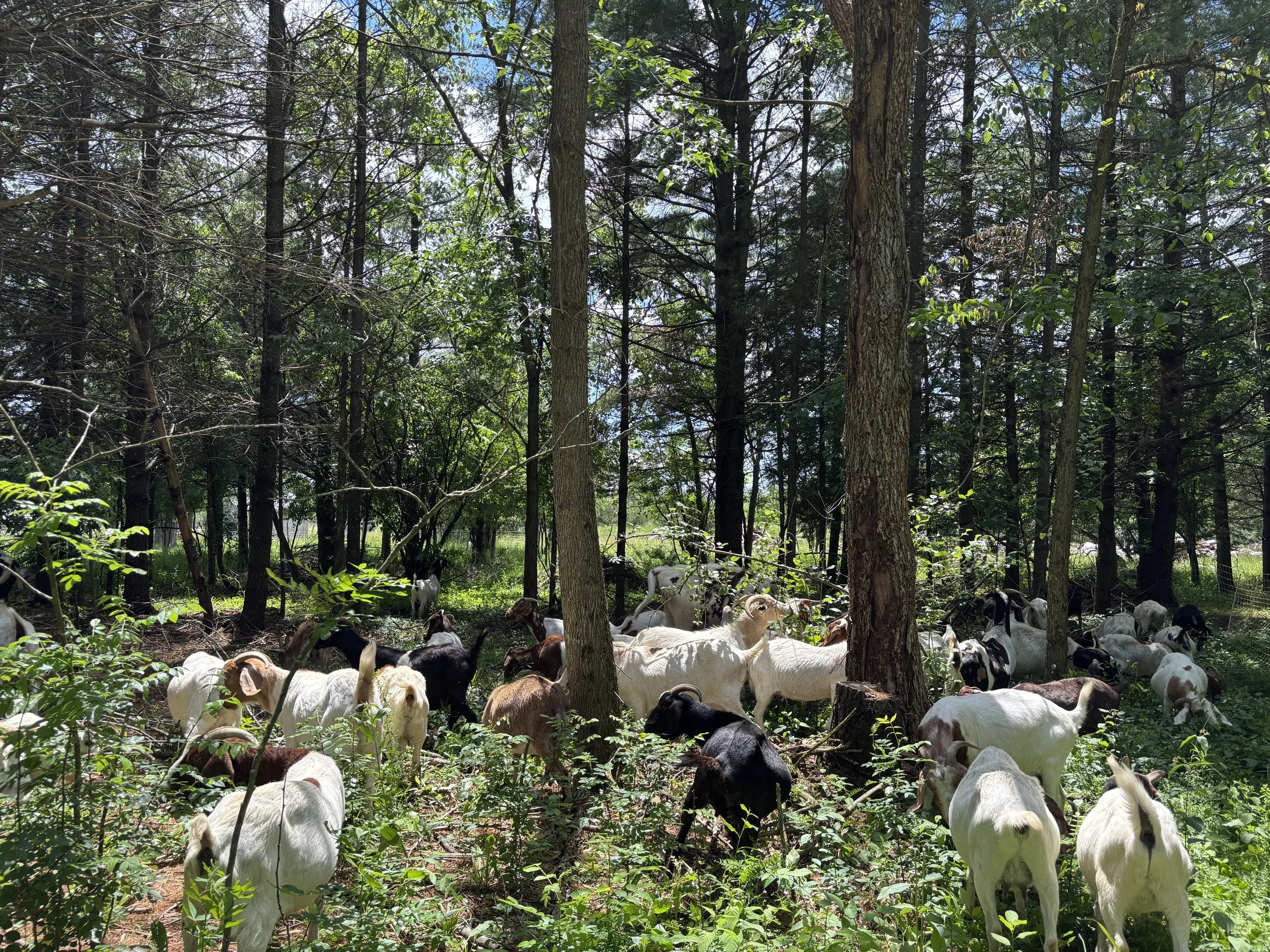
We bought our property before we'd even seen the house.
The evergreens were the reason. We drove past, saw the tree line, and that was essentially the decision. The house was secondary.
I didn't know at the time that there was science behind why those trees felt important. I just knew they did.
I've been doing some training lately on the relationship between nature and immune function — and something my trainer shared has stayed with me. When she feels herself starting to get sick, she spends a minimum of two hours outside, specifically around trees. She doesn't get sick.
My immediate reaction was: that sounds completely made up.
My second reaction was: I live with someone who spends hours in the woods in all weather, including January in Ontario, and he almost never gets sick. And when he does, he recovers faster than most people I know.
So I kept listening.
What phytoncides actually are
Trees communicate. Not in the way we do — but they release airborne chemical compounds called phytoncides as part of their natural defence system against bacteria, insects, and environmental stress.
When we breathe those compounds in, something measurable happens in our bodies.
Research — particularly out of Japan, where forest bathing or Shinrin-yoku has been studied seriously since the 1980s — shows that exposure to phytoncides significantly increases natural killer cell activity and decreases cortisol levels.
Natural killer cells are part of your immune system's front line. They identify and destroy cells that have been infected by viruses or that have become cancerous. More NK cell activity means a more responsive, more capable immune system.
Cortisol — as most people reading this probably know — is your primary stress hormone. Chronically elevated cortisol suppresses immune function, disrupts sleep, increases inflammation, and contributes to essentially every chronic health condition we associate with modern stress.
Two things happening simultaneously when you spend time around trees: your immune system gets stronger and your stress response gets quieter.
Those aren't separate effects. They're deeply connected. Chronic stress suppresses NK cell activity. Reducing cortisol through time in nature gives your immune system room to do its job properly.
This isn't wellness marketing. This is measurable, repeatable, peer-reviewed physiology.
Why two hours and why trees specifically
The two hour threshold isn't arbitrary — it's where the research shows meaningful changes in NK cell counts beginning to occur. Four hours produces stronger effects. Spending time over multiple days compounds the benefit further, with some studies showing elevated NK cell activity for up to a week after a sustained nature immersion.
My first thought when I heard this was: who has four hours to spend in the woods?
My second thought — the one I couldn't shake — was: maybe that reaction is part of the problem.
We've built lives so full that the idea of spending four hours outside feels absurd. Indulgent. Unrealistic. And meanwhile our immune systems are compromised, our cortisol is chronically elevated, and we're getting sick more often and recovering more slowly.
The trees have always been there. We just stopped having time for them.
Not all trees release phytoncides equally or consistently. Deciduous trees — the ones that lose their leaves — are seasonal releasers. In summer and autumn they're producing phytoncides actively. In winter, when the leaves are gone, the release drops significantly.
Coniferous trees — pine, spruce, cedar, fir — release phytoncides year round. In winter in Ontario, when deciduous forests are bare and most people have retreated entirely indoors, the evergreens are still doing the work.
This matters practically. A walk through a bare winter forest of maple and oak gives you fresh air and movement — both valuable. A walk through pine trees in January gives you that plus active phytoncide exposure. If immune support is what you're after, the tree species matters.
The part that surprised me most
You can't just be physically present in nature and get the full benefit.
This was the part that stopped me.
The research shows that passive nature exposure — being outside but mentally elsewhere, ruminating, scrolling your phone, running through your to-do list — produces weaker effects than mindful engagement with the natural environment.
You have to actually be there. Noticing what's around you. What you can hear. What the air smells like. What's moving at the edge of your vision.
Which means the thing that makes nature therapeutically effective is also the thing most of us are worst at — actually being present somewhere instead of mentally somewhere else entirely.
This isn't a coincidence. The same chronic stress that suppresses our immune function also makes it nearly impossible to be present. We're so accustomed to directing our attention inward — to our thoughts, our worries, our planning — that the idea of just paying attention to trees for two hours feels almost uncomfortable.
That discomfort is information.
The difficulty of being present in nature is a direct measure of how depleted your attentional resources actually are. And the practice of returning your attention to what's actually around you — the bark, the light, the sound of wind in pine needles — is itself a form of restoration.
The immune benefit and the attentional restoration are the same practice. You can't fully separate them.
What this looks like practically
I'm a nurse. I don't recommend things I don't believe have a physiological basis. And I'm telling you — spend time in trees.
Not as a replacement for medical care. Not as a cure for anything. But as something your immune system and nervous system are genuinely designed to receive and benefit from, and that most of us have almost entirely removed from our lives.
A few practical things worth knowing:
Two hours is the minimum for meaningful immune effects. More is better. You don't have to do it all at once.
In winter in Ontario, seek out coniferous trees — pine, cedar, spruce. They're releasing phytoncides when the deciduous forest is dormant.
Put your phone away. Or at least in your pocket. The benefit requires some degree of actual presence — not performance of being outside while mentally elsewhere.
You don't need to be doing anything specific. Walking slowly works. Sitting works. Standing and looking up through the branches works. The practice isn't complicated. It's just quiet.
If you feel resistance to the idea of spending two hours outside doing nothing particularly productive — notice that resistance. It's telling you something about how you've been living.
We bought this property for the evergreens before we'd seen the house. I didn't know why at the time.
I think I'm starting to understand.
Further reading
The research on phytoncides and immune function comes largely from the work of Dr. Qing Li, whose book Forest Bathing: How Trees Can Help You Find Health and Happiness is the most accessible summary of the Japanese research for a general audience. His studies on NK cell activity and phytoncide exposure are published in peer-reviewed immunology journals and are worth reading if you want to go deeper than this post.
The Attention Restoration Theory, work by Rachel and Stephen Kaplan, explains why mindful engagement with nature produces stronger effects than passive exposure — and why the difficulty of being present in nature is itself diagnostic.
→ Read more about ecotherapy and nature-based therapy at Wandering Willow
wanderingwillowpsychotherapy.ca/ecotherapy
→ Learn more about chronic stress and what it does to your body
wanderingwillowpsychotherapy.ca/chronic-stress-and-burnout
---
If this resonated and you're curious about what it looks like to bring nature into the therapeutic process — that's exactly what ecotherapy at Wandering Willow is.
Your first session is just a conversation.