

How to Live a Slower Life (What Animals on the Farm Can Teach Us About Stress)
On the farm, nothing moves quickly without a reason.
The animals aren’t rushing from one task to the next.
They aren’t checking what comes next.
They aren’t trying to get ahead of the day.
They move when there’s something to respond to.
And when there isn’t, they rest.
That rhythm is something many humans have lost.
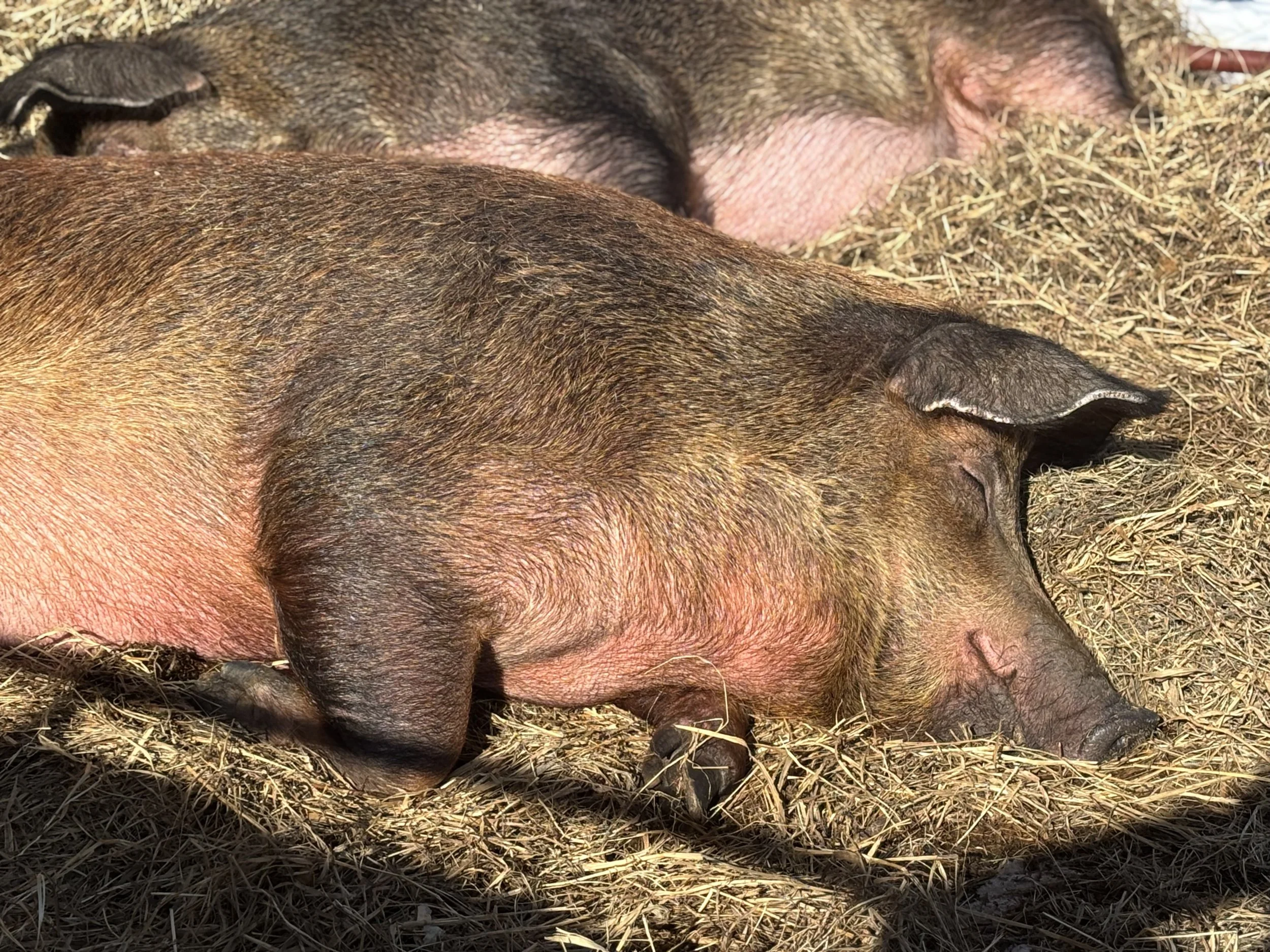
“What do Piggies dream of when they take a little piggy snooze?” A happy and sleepy pig
What Animals Do Differently
Animals naturally move between:
• activity
• rest
• attention
• disengagement
They don’t stay in a constant state of urgency.
A goat will graze, pause, look around, lie down, chew cud, then get up again.
A horse will stand still for long periods, then move when something changes.
There is a rhythm between doing and not doing.
Humans often skip that rhythm entirely.
5 Ways to Live Slower (Inspired by the Farm)
1. Move When There’s a Reason — Not Constantly
Animals don’t move just to stay busy.
They respond to something:
• hunger
• curiosity
• a change in the environment
But they don’t create unnecessary activity.
Practice:
Notice how often you move from one task to another out of habit, not necessity.
Try pausing and asking:
Do I actually need to do this right now?
2. Let There Be Space Between Things
On the farm, there is often nothing happening.
And that’s normal.
Animals don’t rush to fill that space.
Humans tend to fill every gap with:
• phones
• noise
• tasks
Practice:
Leave one moment of your day unfilled.
No phone. No task. No distraction.
Just sit, stand, or observe.
3. Fully Disengage After Activity
When animals are done, they are done.
A goat doesn’t keep mentally replaying grazing.
A horse doesn’t continue scanning for the last noise once it’s passed.
Humans often carry the last task into the next one.
Practice:
After finishing something, pause before starting the next thing.
Even 30 seconds of stillness can help your system reset.
4. Rest Without Earning It
Animals don’t earn rest.
They don’t complete a checklist before lying down.
Rest is part of their natural cycle.
Humans often treat rest as something that must be deserved.
Practice:
Choose one moment to rest without justifying it.
No productivity required.
5. Pay Attention to Your Environment
Animals are aware of their surroundings without being overwhelmed by them.
They notice:
• sounds
• movement
• changes
But they don’t stay in constant alert unless something is actually wrong.
Humans often live in constant anticipation.
Practice:
Step outside and notice:
• what you can hear
• what you can see
• what is actually happening right now
This helps shift the nervous system out of constant “what’s next” mode.
Why This Matters for Stress
Your nervous system is designed for rhythm, not constant activation.
Animals demonstrate that rhythm naturally:
engage → disengage → rest → repeat
Humans often get stuck in:
engage → engage → engage → crash
Living slower is not about doing less.
It’s about returning to a more natural pattern of movement and rest.
Sometimes slowing down doesn’t come from trying harder.
It comes from observing what already works in the world around us.
On the farm, that rhythm is always there.
Need some help with this?
If you feel like your system has been stuck in constant urgency or overwhelm, therapy can help you reconnect with a more balanced rhythm.
You can learn more or book a free consultation here: